Emergency Towing in Bristol, Connecticut
When a Vehicle Is No Longer Safe to Drive
A breakdown does not have to leave a vehicle completely dead before towing becomes the right choice. Overheating, collision damage, steering trouble, a failed wheel, or a serious mechanical issue can make continuing the trip unsafe. Normal Towing Pros provides emergency towing throughout Normal and the surrounding Bloomington-Normal area for vehicles that cannot be driven safely.
Common situations that may call for emergency towing include:
- Vehicles that will not start
- Engine or transmission problems
- Overheating
- Damaged wheels or tires
- Steering or suspension failure
- Collision damage
- Major fluid leaks
- Electrical or charging-system problems
- Vehicles that start but cannot move normally
Where the vehicle stops also matters. A breakdown in a parking lot may allow plenty of room to assess and load the car, while a vehicle disabled along I-55, I-74, Veterans Parkway, or another busy road can create a more immediate safety concern. If you are exposed to moving traffic, move yourself and any passengers to a safer location when possible and contact emergency services if there are injuries, fire, or an active roadway hazard.
A tow may still be appropriate even when the engine runs. Continuing to drive with severe overheating, grinding noises, steering problems, leaking fluids, or accident damage can turn a manageable repair into a more serious one. When the vehicle cannot safely make the rest of the trip, transporting it to a repair facility is usually the better next step.
When Is Towing Safer Than Continuing to Drive?
A vehicle should usually be towed when driving it farther could make the damage worse or create a safety risk. Some of the clearest warning signs include:
- Smoke, steam, or a strong burning odor
- A major fluid leak underneath the vehicle
- Grinding noises or severe vibration
- Steering or braking problems
- A visibly damaged wheel or tire
- Collision damage affecting the suspension, wheels, or body
- Engine overheating
- Multiple warning lights combined with poor performance
- A vehicle that starts but will not move or drive normally
One warning light by itself does not always mean you need a tow. The bigger concern is when warning lights appear along with overheating, unusual sounds, leaking fluids, smoke, or a noticeable change in how the vehicle handles. At that point, stopping and having the vehicle transported can help avoid turning a smaller problem into a much larger repair.
What to Expect During an Emergency Tow
Before the vehicle is moved, the towing method should be matched to its condition. A routine breakdown may be handled differently from an AWD vehicle, low-clearance car, or vehicle with damaged wheels or suspension. In some cases, flatbed towing is the better option because the entire vehicle remains off the roadway during transport.
Once the proper equipment is selected, the vehicle is loaded, secured, and taken to the destination you choose. That may be a repair shop, dealership, residence, body shop, storage facility, or another appropriate location. The goal is to move the vehicle without creating additional damage and give you a clear next step after the breakdown.

When a Mechanical Issue Should End the Trip
Some vehicle problems are warning signs that continuing to drive is likely to make things worse. An overheating engine, transmission trouble, electrical failure, steering problems, major fluid leaks, or damaged belts and hoses can all leave a car running but no longer safe to keep on the road.
In Bristol, that situation might happen along Route 6, Route 72, Route 229, or on a neighborhood street where there is more room to pull over. The surroundings matter because traffic, available shoulder space, and vehicle access can affect how safely the car can be recovered.
Once the vehicle is stopped, the next question is how it should be moved. A car that still rolls and steers normally may be handled one way, while an AWD vehicle, low-clearance car, or vehicle with damaged wheels or suspension may need flatbed transport. The towing setup should be based on the vehicle’s condition rather than using the same approach for every breakdown.
What to Tell Us Before the Truck Arrives
You do not need to know exactly what failed before calling. What helps most is a clear description of where the vehicle is, what it is doing, and anything unusual you noticed before the problem started.
Useful details include:
- Your current location or a nearby landmark
- Vehicle year, make, and model
- What happened leading up to the breakdown
- Whether the engine will start
- Whether the vehicle can roll or steer
- Any smoke, leaks, warning lights, or visible damage
- Whether the vehicle is AWD or 4WD, if known
- Where you would like the vehicle transported
These details can help determine what kind of response makes sense before the truck arrives. A simple no-start may require a different setup than a vehicle with locked wheels, collision damage, or steering problems.
The clearer the situation is from the beginning, the easier it is to decide whether roadside assistance, conventional towing, flatbed transport, or another recovery method is appropriate.
Collision Recovery After an Accident
A car can sometimes move after a crash and still be in no condition to drive. An impact may bend a wheel, shift suspension parts, damage steering components, or push bodywork into a tire. Fluid leaks and cooling-system damage can also appear after the vehicle has already come to a stop.
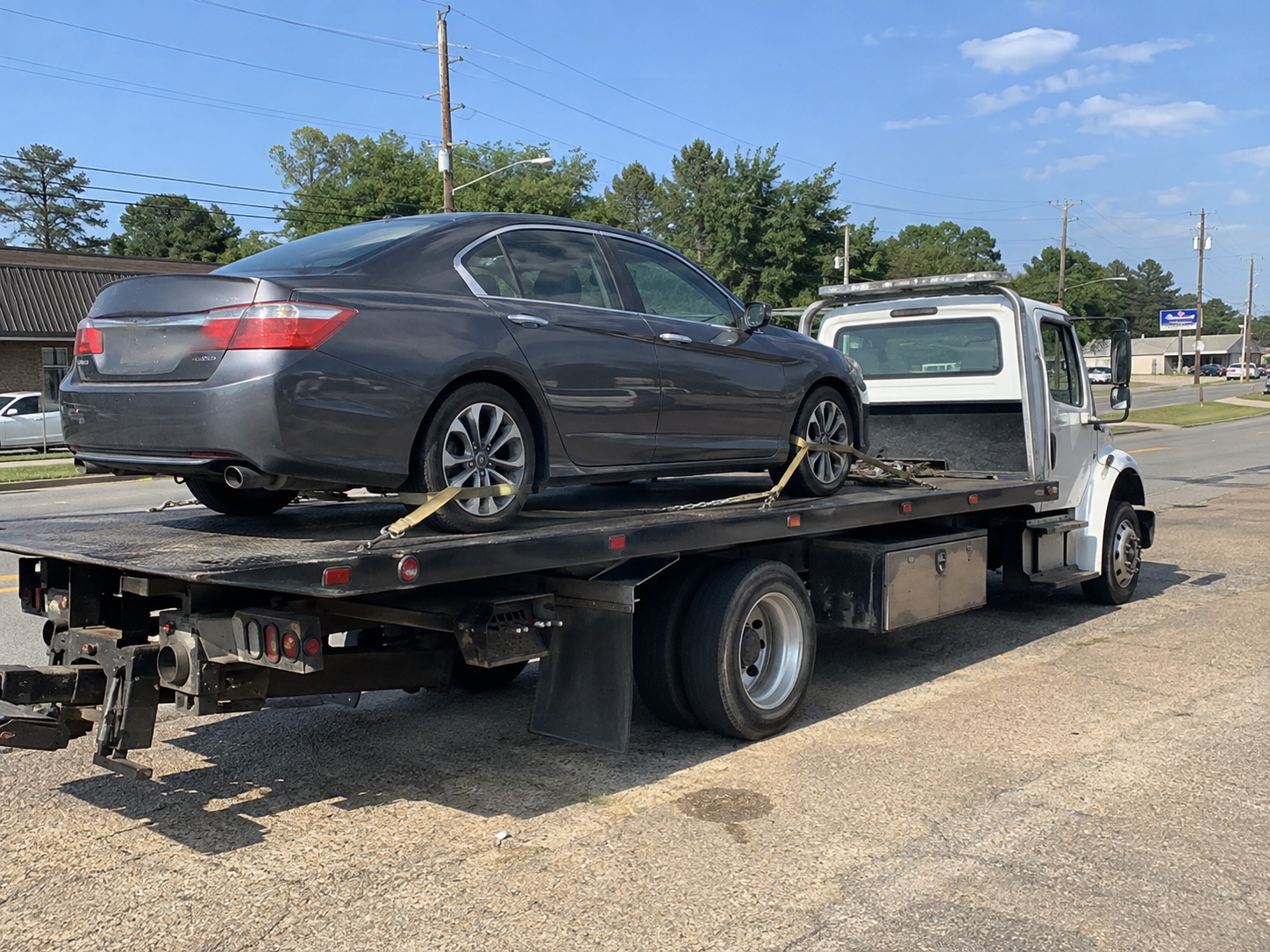
Once any immediate safety concerns are handled, the next step is deciding how the vehicle can be recovered without making the damage worse. Cars that no longer roll or steer normally may need to be winched onto a flatbed rather than moved with a conventional towing setup.
Accident-damaged vehicles can be taken to a body shop, repair facility, storage location, residence, or another destination you choose. Before pickup, it helps to mention visible wheel damage, leaking fluids, deployed airbags, or anything else that could affect loading.
If the collision happened near traffic, follow the directions of police or emergency personnel first. A vehicle that is smoking, leaking heavily, sitting unevenly, or no longer braking or steering normally should not be driven.
When a Roadside Fix Is Not Enough
Roadside assistance is useful when the problem is minor and the vehicle can safely continue afterward. A jump-start, tire change, fuel delivery, or lockout service may solve the issue without needing transport.
The situation changes when the underlying problem is more serious. A failed jump-start, bent wheel, overheating engine, steering problem, major vibration, or mechanical failure can leave the vehicle unsafe even after basic roadside help has been attempted.
The important question is not simply whether the car can move. It is whether it can finish the trip without causing more damage or creating a hazard. If the answer is unclear, stopping and arranging a tow is usually safer than testing the vehicle in traffic.
For vehicles disabled along Route 6, Route 72, Route 229, or other busy roads around Bristol, the pickup location matters too. If there is not enough room to work safely, transporting the vehicle may be the better option even when the original problem seems minor.
How We Decide the Best Way to Recover Your Vehicle
The recovery plan starts with the condition of the car and the space around it. A vehicle stopped in a Bristol parking lot may leave plenty of room for loading, while one sitting along Route 6, Route 72, Route 229, or another busy roadway may require a more careful setup because of traffic and limited working space.
Next, we look at how the vehicle can physically be moved. Wheel damage, steering problems, ground clearance, drivetrain type, suspension failure, and collision damage can all change which towing method is appropriate. A vehicle that still rolls freely may be straightforward to transport, while a low-clearance car, AWD vehicle, or car with damaged wheels may be better suited for a flatbed.
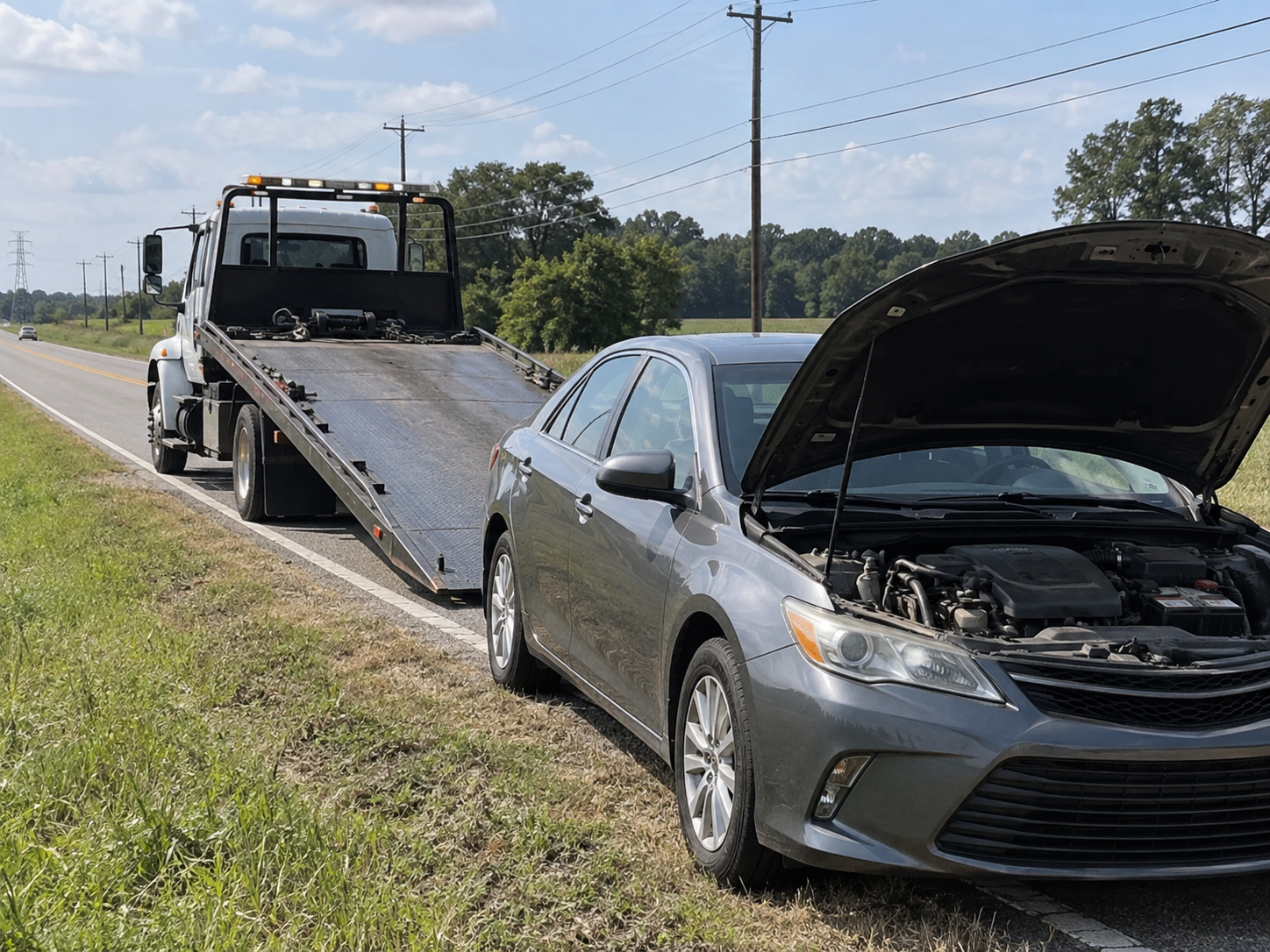
Some vehicles cannot simply be driven onto the truck. Locked wheels, bent suspension components, or severe accident damage may require winching so the vehicle can be brought onto the bed without relying on damaged parts to move normally. After loading, it is positioned and secured before transport begins.
The goal is to choose a recovery method based on what the vehicle can safely tolerate. Matching the equipment to the actual situation helps reduce unnecessary movement of damaged components and makes the towing process more controlled from pickup through delivery.
What Helps Us Prepare for an Emergency Tow
The more we know before arriving, the easier it is to plan for the pickup. You do not need to diagnose the vehicle yourself—just describe what happened and anything unusual you can see or hear.
Helpful details include your exact location, vehicle year, make and model, whether the engine starts, and where you want the vehicle taken. If you are stopped along Route 6, Route 72, Route 229, or another busy road around Bristol, a nearby intersection, business, or landmark can also make the vehicle easier to locate.
For damaged vehicles, mention anything that could complicate recovery. A bent wheel, deployed airbags, leaking fluids, damaged suspension, or body panels resting against a tire may change how the vehicle needs to be loaded.
Sharing those details ahead of time gives a better idea of whether the call is likely to require conventional towing, a flatbed, winching, or another recovery approach.
The Vehicle Determines the Towing Setup
Choosing the equipment starts with what the car is physically capable of doing. Can the wheels roll freely? Does the steering still work? Is anything dragging underneath the vehicle? Has a collision changed how the car sits?
Those questions matter because one towing method does not fit every vehicle. A straightforward mechanical breakdown may be relatively simple to move, while an AWD vehicle, low-clearance car, or vehicle with suspension or wheel damage may need to remain fully supported on a flatbed.
There are also situations where towing may not be necessary at all. If a jump-start, tire change, fuel delivery, or another roadside service can safely solve the problem, that may be the simpler option. When the vehicle does need transport, the goal is to use a setup that fits its condition rather than forcing it into an unsuitable towing method.
Need Emergency Towing in Bristol?
A breakdown can leave you with very little time to decide what to do next. If the vehicle will not start, has been damaged in a collision, cannot steer or roll normally, or shows signs that make continued driving unsafe, Bristol Towing can help move it to a more appropriate destination.
Emergency towing is available 24 hours a day throughout Bristol for calls on residential streets, parking areas, commercial corridors, and major routes such as Route 6, Route 72, and Route 229.
When you call, tell us where the vehicle is, what happened, and where you need it taken. From there, the towing approach can be matched to the condition of the vehicle and the circumstances at the pickup location.