Auto Wrecking and Flatbed Towing in Bristol, Connecticut
Some vehicles should be lifted completely off the pavement rather than moved with part of the drivetrain still rolling. That is often the case after a collision, when a wheel is badly damaged, when suspension parts are compromised, or when a low-clearance vehicle cannot be handled comfortably with a conventional towing setup.
Flatbed service allows the vehicle to be carried on the truck bed instead of relying on its own wheels during transport. If the car will not move under its own power, it can be pulled onto the bed with a winch. Vehicles with steering, wheel, or body damage may also need extra care when being positioned so already-damaged components are not placed under more strain.
The recovery process depends on how the vehicle is sitting when the truck arrives. Wheel movement, drivetrain type, clearance, suspension condition, visible collision damage, and available space around the vehicle can all influence how loading is handled. A car stopped in an open parking area may be relatively simple to recover, while one sitting along Route 6, Route 72, or another busy Bristol road may require a different setup.
Bristol Towing provides flatbed towing and vehicle recovery for non-running, damaged, and accident-involved vehicles throughout Bristol and nearby communities.
When Flatbed Towing Makes More Sense
The deciding factor is usually what the vehicle can safely do on its own. If the wheels are locked, the suspension is damaged, the steering no longer works correctly, or the car sits too low for another towing setup, carrying the entire vehicle on a flatbed can provide a more controlled way to move it.
Collision damage is one common example. A bent wheel, shifted suspension component, or body panel pressed against a tire can make it a bad idea to let the vehicle roll during transport. Certain AWD and 4WD vehicles may also benefit from having all four wheels supported on the truck bed rather than leaving part of the drivetrain turning on the roadway.
Loading conditions matter as well. Recovering a disabled car from an open driveway or parking area may be relatively simple, while working along Route 6, Route 72, Route 229, or another heavily traveled Bristol road can require more careful truck positioning and less time spent near moving traffic.
Flatbed towing is not automatically the answer for every breakdown. A vehicle that rolls normally and has no drivetrain, clearance, or damage concerns may be handled another way. The purpose of using a flatbed is to choose it when the condition of the vehicle makes full support during transport the more practical option.

Vehicles That Benefit From Flatbed Transport
A flatbed becomes useful when allowing the vehicle to roll during transport could create problems. Cars with damaged wheels, suspension issues, low ground clearance, or drivetrain concerns may be better handled with all four wheels supported on the truck bed.
Flatbed towing is commonly used for:
- Many AWD and 4WD vehicles
- Cars and SUVs damaged in collisions
- Vehicles with steering or suspension problems
- Low-clearance cars
- Bent or damaged wheels
- Non-running vehicles
- Longer-distance transport where drivetrain movement should be limited
Getting the vehicle onto the truck can require more than simply driving it up the bed. If it cannot move normally, a winch may be used to bring it into position. From there, the vehicle is secured at proper attachment points so it remains stable during the trip.
The pickup environment can also affect the recovery plan. A disabled vehicle in a Bristol parking lot may provide plenty of room to work, while one stopped near traffic on Route 6, Route 72, or Route 229 may require a more controlled setup.
Flatbed service is not necessary for every tow. It is most valuable when the vehicle’s condition makes keeping it fully supported during transport the safer and more practical approach..
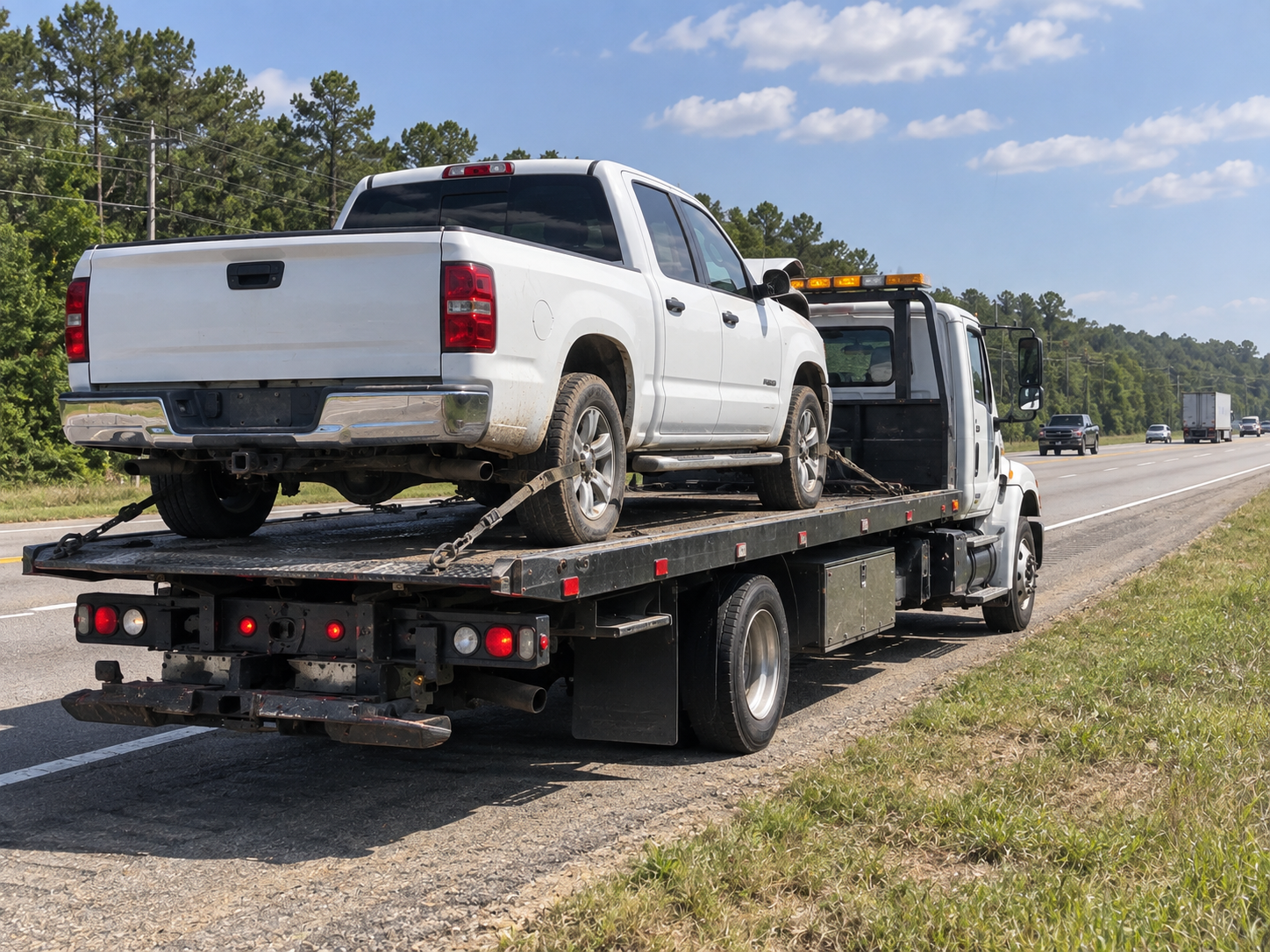
Recovering Vehicles After Serious Damage
A heavily damaged vehicle may need more than a routine tow. Bent wheels, broken suspension parts, locked steering, or a car sitting at an unusual angle can all change how recovery has to be handled before transport even begins.
The first concern is whether the vehicle can roll, steer, and support itself normally. If it cannot, forcing it to move on damaged components may create additional problems. In those cases, a winch and flatbed can be used to bring the vehicle onto the truck without relying on its own wheels or drivetrain.
Some vehicles may ultimately need to go to a body shop or repair facility, while others may be taken to a storage yard, salvage facility, residence, or another requested destination. Before pickup, let us know about visible wheel damage, leaking fluids, broken suspension parts, or anything unusual about how the vehicle is positioned.
Those details help determine the recovery setup before the truck arrives and reduce unnecessary movement of already-damaged components.
After a Collision: Should the Vehicle Be Towed?
A vehicle can still start after an accident and be in no condition to continue driving. Impact damage may affect the steering, suspension, tires, cooling system, wheels, or body even when the car appears relatively intact from the outside.
Pay attention to how the vehicle behaves after the collision. Problems that should be mentioned before pickup include:
- Bent or damaged wheels
- Tires losing air
- Fluid leaking underneath the vehicle
- Deployed airbags
- Steering that no longer feels normal
- Suspension damage
- Body panels rubbing against a tire
- A vehicle that cannot roll or steer properly
If any of these problems are present, having the vehicle transported gives it a chance to be inspected before more damage is caused. Depending on its condition, recovery may involve flatbed towing, winching, or another loading method.
If the crash happened along Route 6, Route 72, Route 229, or another busy road around Bristol, deal with personal safety first. Follow instructions from police or emergency personnel and avoid attempting to drive a vehicle that no longer handles or operates normally.
When a Damaged Vehicle Needs a Different Recovery Approach
A vehicle that cannot roll, steer, or sit normally may need more than a routine towing setup. Collision damage, a broken suspension component, a locked wheel, drivetrain trouble, or a major mechanical failure can all make standard loading difficult or unsafe.
In those cases, the recovery process has to work around the vehicle’s limitations. A car that cannot move under its own power may be pulled onto a flatbed with a winch rather than driven into place. If the wheels are damaged or the suspension has collapsed, keeping the vehicle fully supported during transport can help avoid putting additional stress on already-compromised parts.
Before loading starts, the vehicle’s position matters too. Low ground clearance, leaking fluids, loose body panels, locked wheels, or a car sitting at an awkward angle can all change how the truck needs to be positioned and how the vehicle should be brought onto the bed.
Once the vehicle is loaded and secured, it can be transported to a body shop, repair facility, dealership, residence, storage yard, or another requested destination.
If your vehicle cannot move normally after a breakdown or collision, describe what happened and anything you can see when you call. Those details help determine whether flatbed towing, winching, or another recovery method is the better fit before the truck arrives.
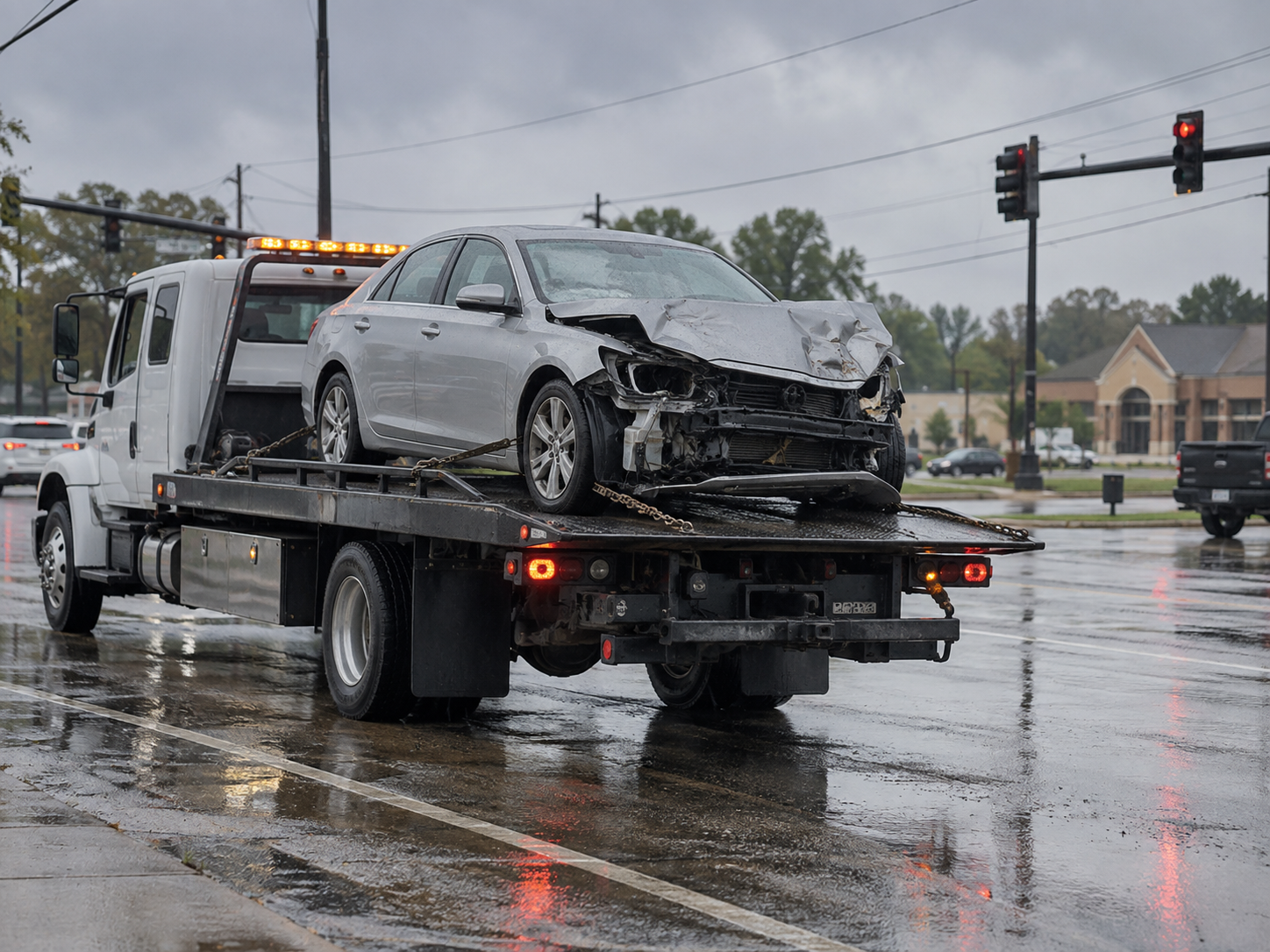
Loading a Damaged Vehicle Without Making Things Worse
A vehicle that has been through a collision or major mechanical failure may not be ready to move in the usual way. Bent wheels, broken suspension parts, loose body panels, low clearance, or steering damage can all change how the recovery needs to begin.
Instead of forcing the vehicle to roll, the truck can be positioned so the car is brought onto the bed in a more controlled way. Locked wheels or a vehicle that cannot move under its own power may require winching rather than driving or pulling it into place.
After the vehicle is on the truck, it is positioned and secured so damaged components are not shifting unnecessarily during transport. The objective is to reduce additional strain on parts that may already be compromised.
Keeping You Informed From Pickup to Drop-Off
Recovery is easier to manage when you know what is happening before the vehicle moves. We first confirm what went wrong, where the vehicle is sitting, and where you want it transported.
Those details can change the recovery plan. A car with suspension damage along Route 6 may need a different approach than a non-running vehicle in a Bristol parking lot. Ground clearance, wheel movement, accessibility, and collision damage can all affect whether a flatbed, winch, or another loading method is appropriate.
The goal is to keep the process predictable so you understand how the vehicle will be handled and what happens after pickup.
Need Flatbed Towing or Vehicle Recovery in Bristol?
Flatbed towing can be a strong option when a vehicle has collision damage, cannot roll normally, sits too low for another towing setup, or should not rely on its own drivetrain during transport. It is also commonly used for many AWD and 4WD vehicles, non-running cars, and vehicles with wheel, steering, or suspension problems.
The recovery method depends on more than the vehicle itself. A car stopped in a driveway may be simple to access, while one disabled along Route 6, Route 72, Route 229, or another busy Bristol road may require a different truck position or loading approach.
When you call, share your location, vehicle information, visible damage, and intended destination. That gives a clearer picture of what equipment may be needed before the truck arrives.